
The hospital in Indonesia
I wake up in a white room with no windows. I don’t know what time it is, nor how long it has been since the surgery.
The first thing I do is lift the sheet to look for my leg. It’s still there.
I smile. I’m grateful to be alive and to still have all four limbs.
I would like to call home immediately to share the good news, but I can’t find my phone.
“I am awake, please come. Please,” I shout.
No one hears me.
After half an hour a very kind nurse arrives. She explains that all my belongings have been given to my friend J., who, after hearing that the surgery had gone well, went back to the hotel to sleep.
In the meantime she offers me her phone so I can send a voice message to my sister. I’m still groggy from the anesthesia and manage to mumble only a few words. But it’s enough to reassure my family. After a night of keeping watch, they can finally go to sleep too.
Later in the afternoon they take me to my room. I have a room all to myself, with a television as well. It’s in Indonesian, but I can’t complain. Shortly afterward J. arrives with my things.
The surgeon who operated on me comes in too. He tells me the surgery went well, but that the condition of my leg had been desperate. He doesn’t rule out complications in the first 72 hours.
I have a high risk of sepsis and limb necrosis.
My hemoglobin is extremely low (6 g/dL). I lost too much blood.
I will need blood transfusions for the next week.
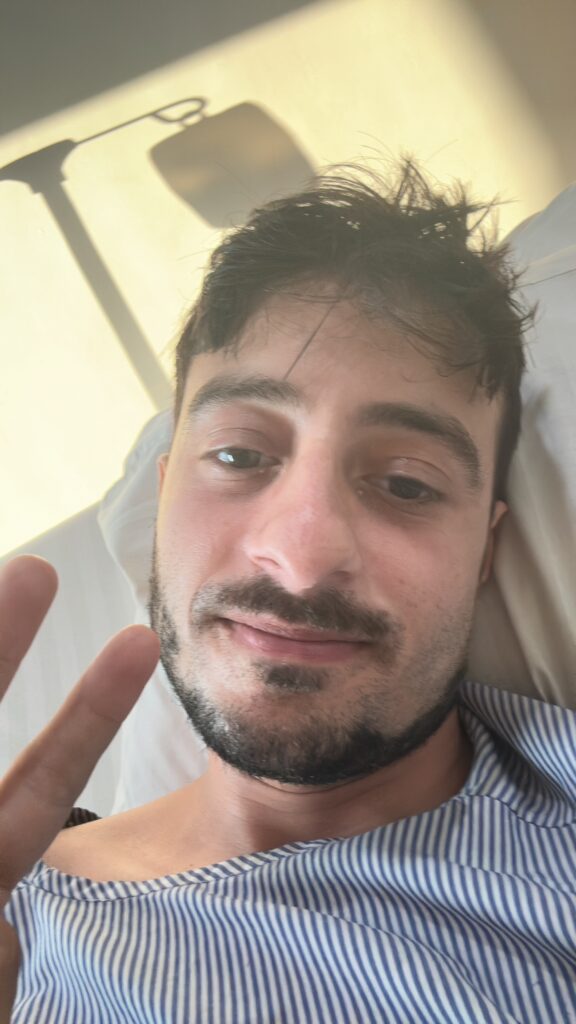
The first days feel like living in a dimension outside of time.
At night I stay awake talking with friends in Europe. Every video call becomes a flood of tears. From joy and from the pain of reliving the trauma of the accident again and again.
Early in the morning I ask for a vial of diazepam and try to sleep for a couple of hours. On good days I manage to sleep until mid-morning. Then the anxiety returns: the thought of meeting the surgeon and receiving the day’s bad news.
On the third day the doctor walks in pushing the dressing cart. He needs to remove the bandages to assess the condition of my leg. He warns me that it will be very painful and suggests I distract myself with some music.
I take his advice literally. I put “Von Dutch” by Charli XCX on loop and hold the sheet in my mouth so I have something to bite.
The surgeon isn’t exaggerating.
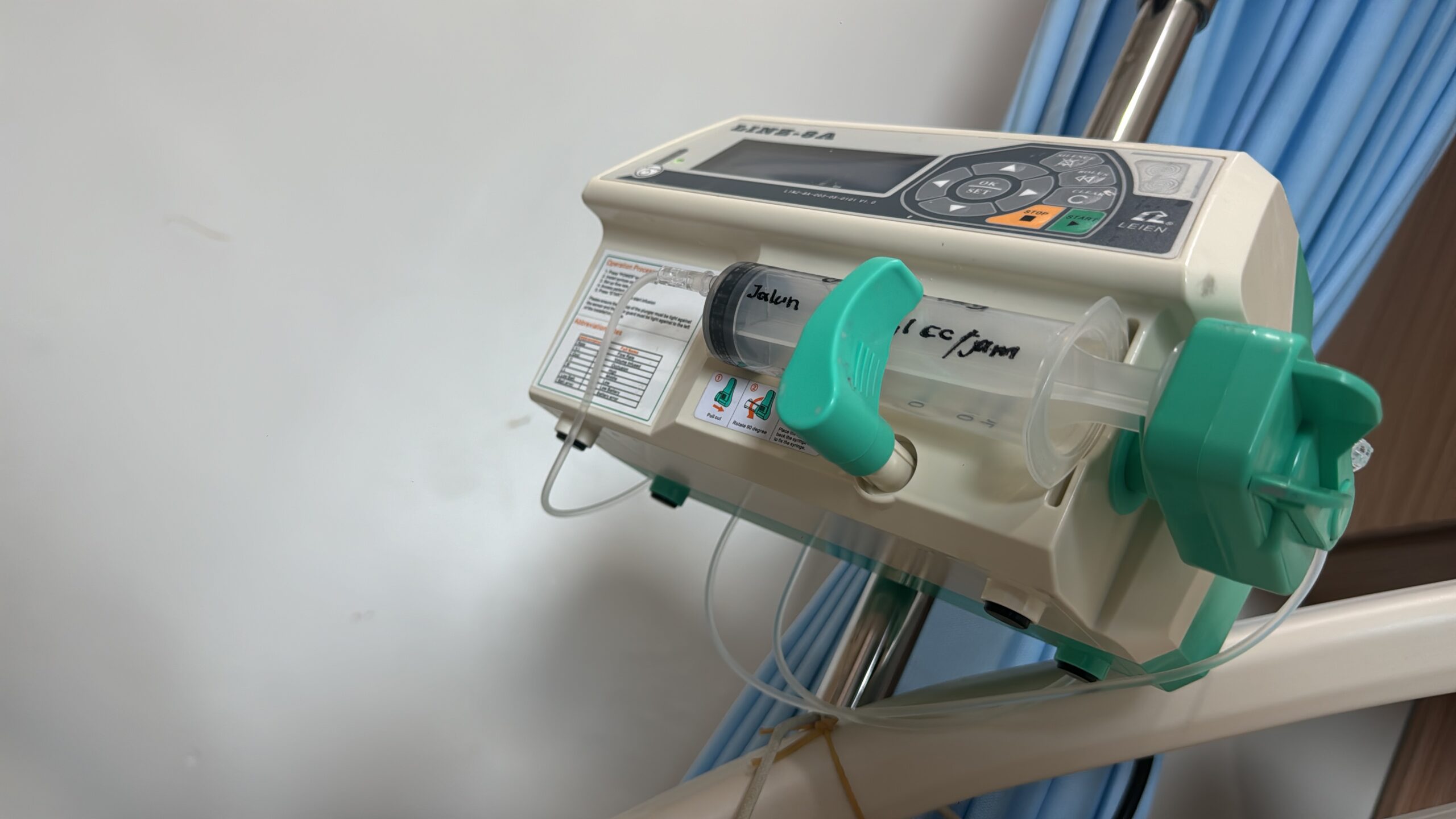
Despite the continuous fentanyl infusion, I feel an intense burning pain. The cotton bandage is stuck to the wounds. It’s impossible to pull it off without tearing away some flesh with it.
Fortunately, the dressings that follow will be much less traumatic.
The best moment of the day comes in the late afternoon, when J. comes to visit me.
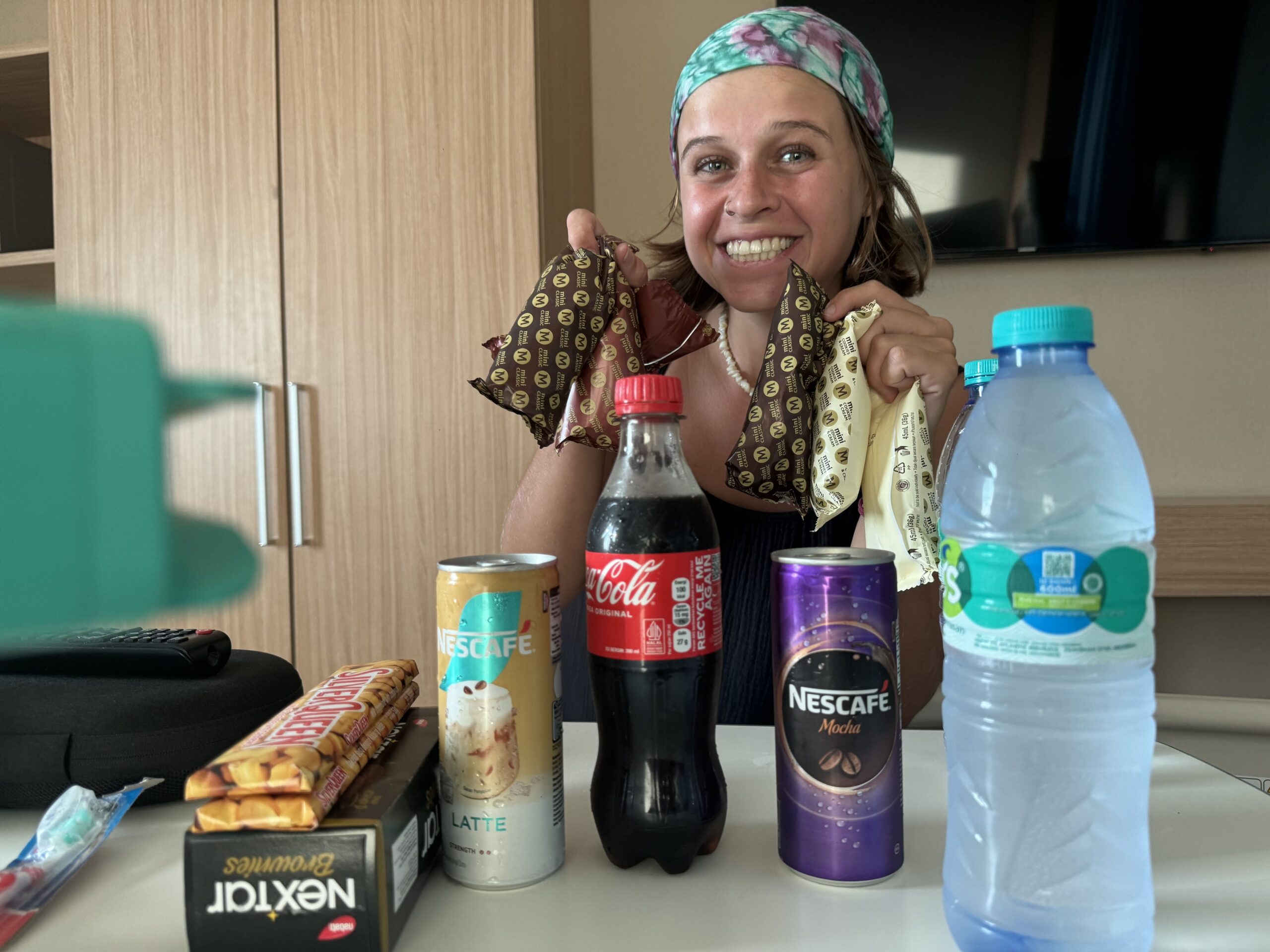
She brings coffee, cookies, and chocolate, puts on a playlist of Brazilian funk on Spotify, and gives me two hours of lightness.
Since the moment of the accident, J. has been my guardian angel.
I will always say that it was she who saved my life, managing the contacts with the health insurance and supporting me through the most difficult hours.
At the end of the month J. has to leave Bali. It isn’t an easy goodbye. I am alone again, and returning home is still out of the question.
The last days of July are the hardest. After six days forced to lie on my back, I ache everywhere. My back feels glued to the sheet, which by now has turned into a kind of shroud, stained with blood, urine, and food scraps. The nurses can neither change the sheets nor wash me.
I’ve had a complete intestinal blockage for a week and I’m beginning to develop a pressure sore in the sacral area.
But the worst part is a series of extremely violent muscle spasms that strike every time I try to fall asleep.
I’m so exhausted that I have to get in touch with some neurologist colleagues in Italy. On their advice, I’m put on a therapy based on opioids, gabapentin, and benzodiazepines, which I will remain on for almost three months.
The spasms, the inability to move my toes, and the discoloration of the limb raise the suspicion of compartment syndrome. The insurance company requests a series of tests that the hospital does not seem willing to perform. The headquarters of Coverwise are on the verge of arranging a transfer to a trusted clinic in Denpasar.
In the end, an agreement is reached with the medical team. I’m the one who insists: I’m not in the mood for any more changes.
From a medical emergency to a legal one
On the afternoon of the 30th, I receive an unexpected visit from the representative of Grab in Bali.
He tells me he is in contact with the CEO in Jakarta. He asks me what kind of compensation I want.
I understand that this is not the moment to reach any kind of agreement. First I need to speak with lawyers. I try contacting the offices of the Italian Ministry of Foreign Affairs, but neither I nor my family receive any answer from the emergency number. From the Embassy of Italy in Jakarta they tell me they cannot provide any form of legal assistance.
So I turn to a private law firm nearby, one with good reviews on Google Maps.
The next day the police inform me that the driver of the motorbike taxi has been found.
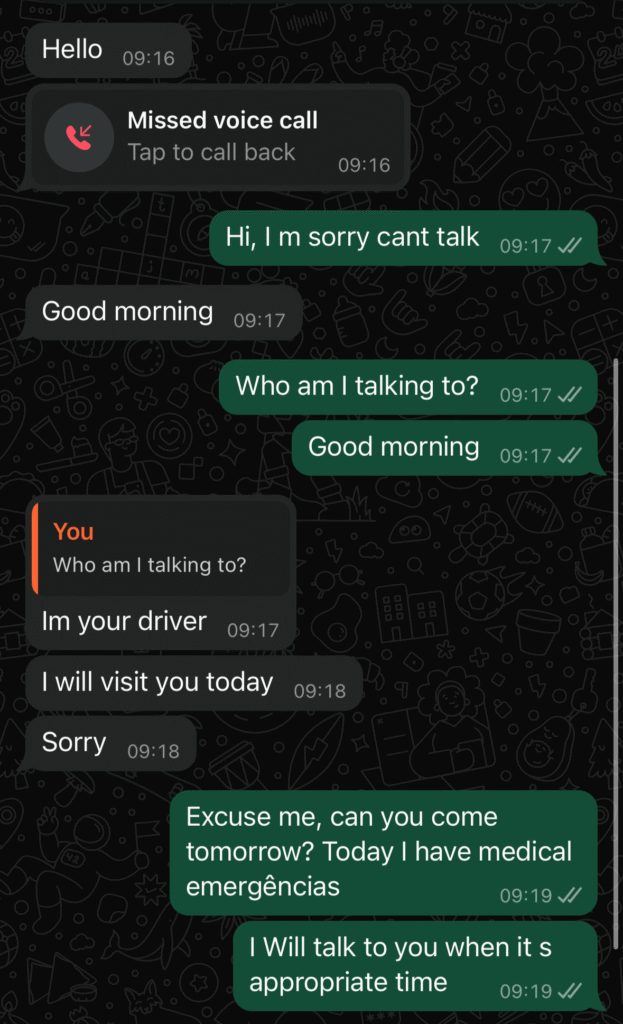
The same young man tries to contact me on WhatsApp. He wants to come and visit me, but I’m not ready yet. I tell the nurses not to let anyone into my room without my consent.
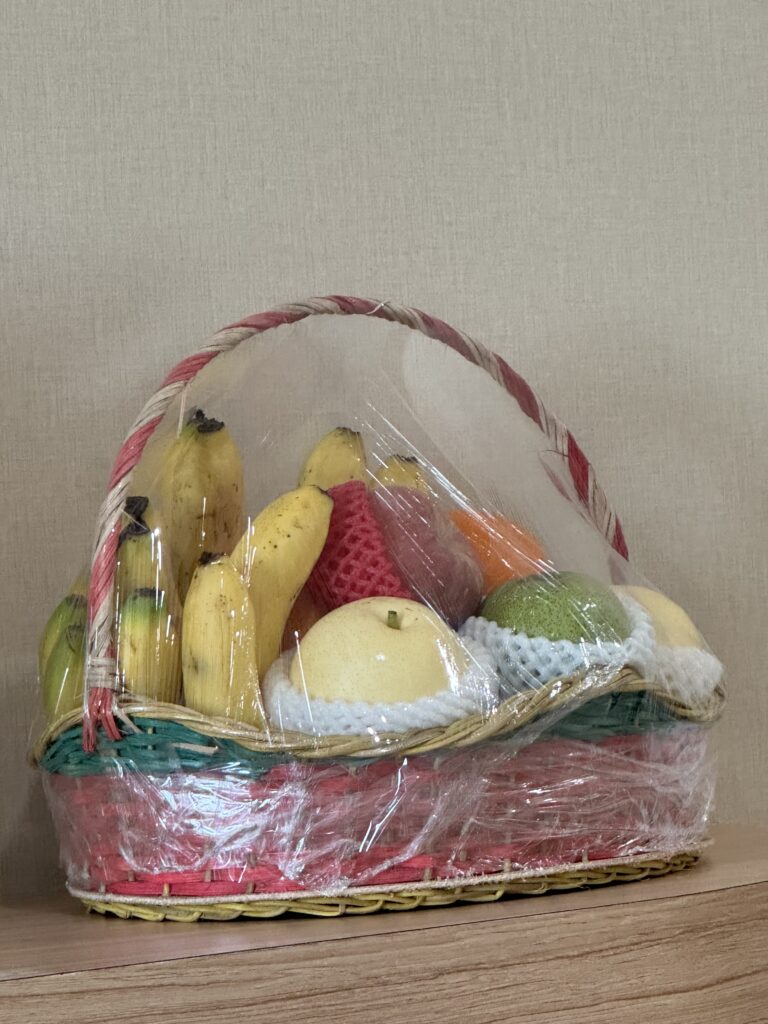
On August 2, my lawyers arrange a meeting with the driver and representatives of Grab.
The driver, a 24-year-old, walks in carrying a basket of fruit as a gesture of apology. His eyes are red and he keeps asking me to forgive him. But I still can’t bring myself to meet his gaze.
There is too much anger inside me. I tell him that one day I will forgive him — but this is not the moment.
Our voices are both strained. At one point he breaks down in tears, hides under a desk, and continues sobbing.
My lawyers sense my emotional state. They take control of the conversation and steer the meeting back to the issue of compensation. The representatives of Grab have an important loophole on their side: according to the app, the ride had been cancelled.
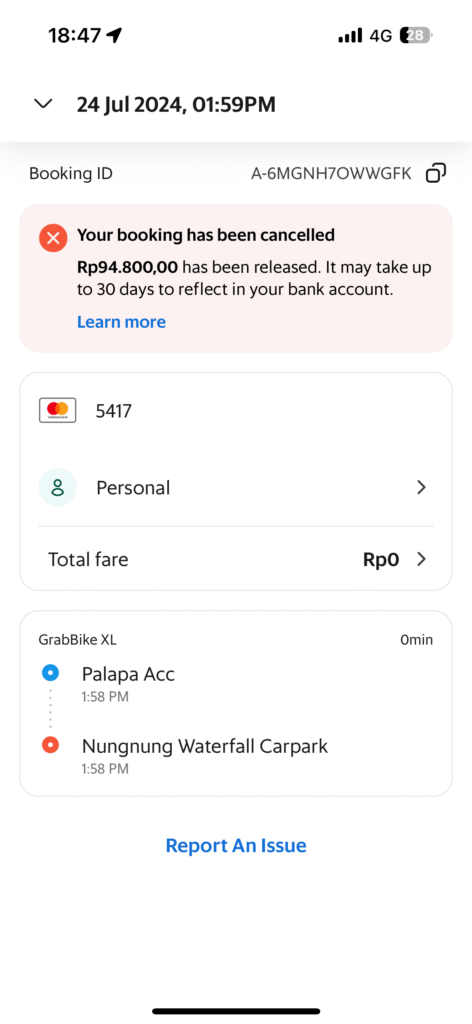
It had been me who cancelled the ride, at the driver’s suggestion. He had offered me a round-trip package at a cheaper price. In reality, I had little to gain from it, but the waterfalls were far away and I was afraid I wouldn’t find another ride.
I agreed to help the rider out and complete the trip outside the app. In my naivety, I had no idea how much this decision would end up putting me at risk.
Whether the ride had been cancelled or not, one fact remained: an official Grab driver had abandoned me. The platform has a duty to ensure that its drivers follow the rules. Rules that in this case were broken three times: by pressuring me to cancel the ride, by violating traffic safety laws, and by leaving me behind without offering assistance.
In Indonesia, such an offense can be punished with up to five years in prison.
The company does not present a satisfactory offer. My lawyers themselves advise me to take more time: we will make a more precise request once we have a realistic estimate of the medical damage. In the meantime, however, it is necessary to proceed with a formal complaint to the police.
At the exact moment I give my consent to move forward against the motorbike driver, something shifts inside me.
From victim, I suddenly feel like the executioner.
The guilt pushes me into a nervous breakdown.
I start shouting and throwing objects against the wall. The nurses call a psychiatrist to calm me down.
Partly because of anxiety, partly because of the painkillers, one night I wake up suddenly with an attack of acute gastritis. It feels like knives stabbing my abdomen. I think I might die at any moment. I shout “Permisi, permisi” but no one hears me.
I call Concetta, a colleague of mine, a doctor who from the very first day has devoted hours of her time to helping me. In Italy it is the middle of the night, but she answers. She always keeps her phone on for me. She helps me breathe, calms me down, and brings me back to reality.
I realize that my brain is my worst enemy. My nerves are on edge, and every complication feels like a catastrophe.
On August 5 the official investigation phase begins. The police arrive with a translator to hear my version of the events.
To my great surprise, I realize that my memory of the accident is far from clear.
I have removed important details, perhaps as a defense mechanism.
It is the police themselves who help me piece things together, comparing my account with the statements of the other witnesses.
Toward the return home
Day by day, the condition of my leg begins to improve. I regain a bit of mobility in my toes, and the color starts to look better. For the first time I manage to lift my leg with my hands and sit on the edge of the bed. The nurses take the opportunity to wash me and change the sheets. I ask for a basin and a razor so I can shave my beard. This small act of self-care helps me shift my perspective.
I understand that a long tunnel still lies ahead of me, but I cannot give up. I have to care about myself and take care of my body.
The routine starts to weigh on me a little less, and my sleep becomes more regular. The doctors begin to talk about a possible return home, but before giving me the fit-to-fly, they need to be certain that I am hemodynamically stable.
After six units of blood, my hemoglobin has returned to an acceptable range, but that alone is not enough. They need to perform a Doppler ultrasound of the lower limbs to check for any residual bleeding. Before I can travel, they must start anticoagulant therapy, which would be incompatible with any ongoing hemorrhage.
There is another value that worries them: the D-dimer, a marker associated with pulmonary embolism. A CT pulmonary angiography is required to rule out any possible complication. My repatriation is postponed day after day.
Then, finally, the definitive date arrives.
I will leave on August 11.
The day before departure I meet, for the first time, the Catalan doctor and nurse sent by the insurance company. We have little time and a lot to do. They request a wheelchair so I can get used to sitting upright. In just a few hours I go from having never left the bed to cruising around the ward in a wheelchair.
For the first time in two weeks, I feel independent.
I’m overjoyed.
Even something as simple as reaching the wardrobe or the sink feels like a huge achievement. I even manage to wash a few clothes and pack my backpack on my own.
On the morning of August 11, I’m in great spirits. The doctor and the nurse sent by the insurance company come to pick me up, bringing breakfast with them. We leave the hospital together. Next to the elevator, all the nurses are waiting for me.
They hug me, take photos, ask for my Instagram contact. One of them even starts to cry.
Maybe they’re not used to international patients, I think to myself.
I almost feel like a star.