
48 hours earlier, the bath in the temple and the signs of death
Two days before the accident, I’m in Ubud. It’s my first stop in Bali, after ten days of backpacking across Thailand, Malaysia, Singapore and Java. I join two guys from Barcelona I met at the hostel, I. and M., for a first tour of the island. We decide to start with the most popular spots right away: the Tegallalang Rice Terrace and Pura Tirta Empul (the Holy Spring Temple), two of those places you feel you already know before setting foot there, seen over and over again on Instagram.
The temple is famous for a purification ritual that involves a small offering — a basket of flowers, incense, and rice — followed by a series of ablutions. You have to immerse yourself in three connected pools and move through twenty different fountains, each with a specific meaning.
At first I’m skeptical. I see streams of tourists and little respect for the rules. I don’t want to be the typical European who ends up contaminating local traditions without understanding them.
In the end, we decide to do it. I. and M. hand me their phones so I can take photos and videos of their ritual. I go third. I’m in a bit of a hurry because it’s starting to get cold. The others are soaked and want to leave. By the time I step into the water, I’m already on autopilot, moving from one fountain to the next without paying much attention.
There aren’t 22 fountains in the temple, but 20.
Two are forbidden to worshippers, reserved exclusively for rites for the dead.
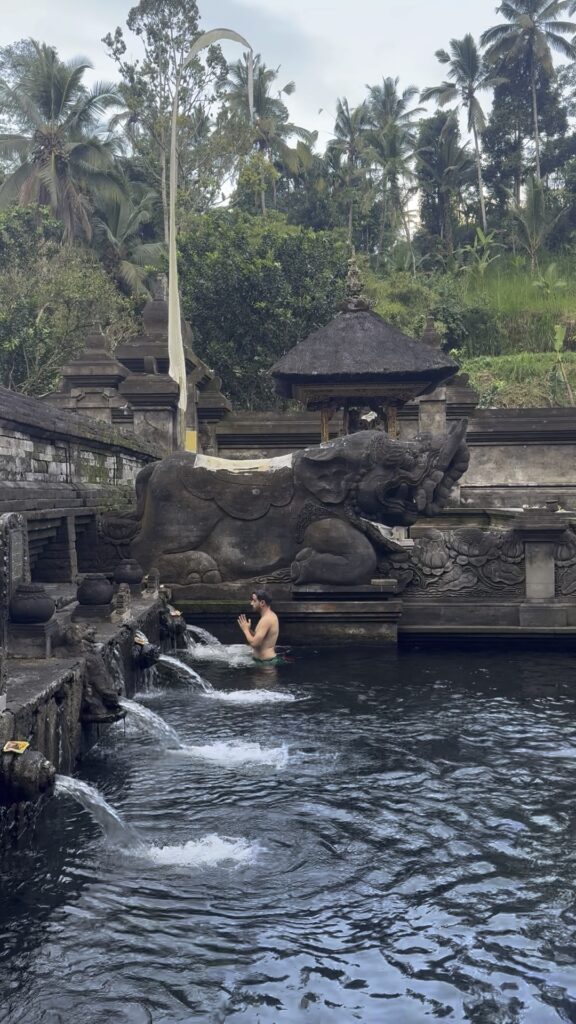
At the end of the ritual, I realize I skipped only one spring.
I look back and understand that I immersed myself in one of the two forbidden ones. Right then I see a priest — a pemangku — screaming at a tourist who is about to step in. “Bad luck, bad luck,” he says.
I mention it to the Spaniards, who don’t make much of it. They tell me not to worry. But I feel an icy hand resting on my head. That sense of inquietude will not leave me in the days to come.
An hour later, in the temple parking lot, I try riding a scooter for the first time. I. lends me his. I’ve been thinking about it for days. In Bali, public transport only works in the bigger towns, and I don’t want to spend a fortune on taxis to get to beaches or waterfalls on the other side of the island. Riding a scooter feels like the only way to be independent. Still, the thought of Bali’s traffic scares me. My Google history is full of searches like “road accidents Bali” and “is driving in Bali dangerous?”
With a mix of nerves and excitement, I get on the scooter and slowly start to move, getting used to it. It’s actually easier than I thought. I begin making wide turns, then figure eights, a little faster each time. During a break, I post an Instagram story that, looking back, feels unsettling.
After twenty minutes in the parking lot, I decide to go out onto the road and ride a full loop around the sanctuary. I. and M. are waiting for me at the other entrance. As soon as I reach the top of the exit ramp, panic freezes me. I brake on the incline and put my foot down. I can’t go right or left. My legs start shaking.
Not knowing how to handle the situation, I get off the scooter with the engine still running. Instead of pushing it by hand, I make a serious mistake and twist the throttle with my right hand. The scooter jerks forward and I lose my balance. I’m still gripping the accelerator: the more the scooter slides ahead, the more I accelerate while falling behind. I’m already in the middle of the road.
The situation is getting out of control. Luckily, two Grab drivers — the Indonesian equivalent of Uber — see me from a distance and rush over to help. They grab the scooter and stop it, then walk me over to I. and M. at the meeting point. I promise myself I will never try to ride a scooter alone again.
24 hours before
The next day, the Spanish guys and I decide to take a trip to the north of the island to visit the Buddhist temple of Brahmavihara-Arama. I. has never carried a passenger on a scooter before. I’m terrified, but I try to hide it. At first he’s very cautious. After a while he starts overtaking and going over 50 km/h. I want to ask him to slow down, but I don’t want to come across as paranoid. I grip the handles so tightly my fingers start to hurt.
At 3:30 p.m. we’re still in Lovina Beach, on the other side of Bali. We have a two-and-a-half-hour ride ahead of us to get back, and it gets dark very early there. I suggest we start heading back, but I. and M. want to make one last stop at Banyumala Waterfall.
We open Google Maps in standard satellite mode. We don’t realize what we’re about to face.
At 4:20 p.m. we find ourselves in the mountains, near Munduk, at an altitude of 1,350 meters. The higher we climb, the darker the sky gets. We’re swallowed by a thick fog.
Then, all of a sudden, the downpour. Within minutes we’re soaked, and we wrap our phones in the only plastic bag we have. We’re shaking, and not just from the cold.
The scooters start to skid. With every turn, it gets worse.
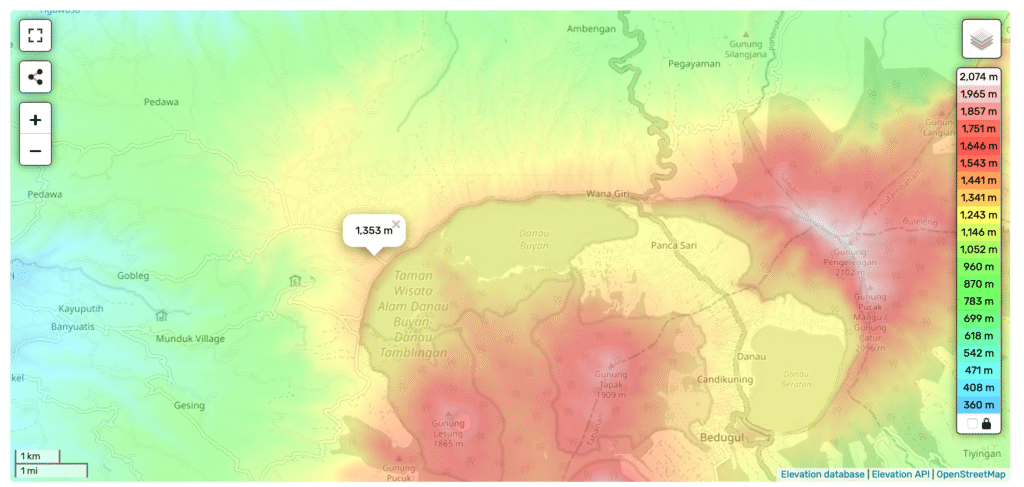
Now M. is scared too and asks if we can stop for a moment. I ask my friend to drop me off in the middle of the road and continue without me. “Stop here, I’ll take a taxi.” “¿Estás seguro?” Well, no, I’m not sure at all. In fact, I know it’s a shitty idea to stay alone in the pouring rain on a mountain road. In the end, I agree to let him take me down to a main road further downhill. When I get off the scooter, I feel an enormous sense of relief: my legs finally stop shaking.
The wait for a taxi feels endless. There are no Grab drivers nearby, and I have to wait fifty minutes before an unlicensed driver picks me up, for the “special price” of twenty-five dollars.
On the way back to the hostel, I can’t stop thinking about I. and M., forced to ride more than 50 kilometers in the pouring rain.
On the way to Ubud, I can’t help thinking about I. and M., forced to ride more than 50 km in pouring rain. I text my friends in Italy: “I’m really freaking out. This was a truly shitty idea.” “I’m really scared of scooters on this island.”
After returning to the hostel, I take a very long hot shower and post an Instagram story with this caption:
“After experiencing an intense danger, the relief of finally being safe is the most fulfilling feeling a human being can have. Nothing is better than calm and peace.”
Like the previous night, I search on Safari: “tourists dead Bali scooter.” It’s an intrusive thought that obsesses me. I also read an article about an Australian tourist left on the roadside after a head-on crash.
All of it saved in my history.
The day of the accident
On the morning of July 24, the Spanish guys head toward the eastern side of the island. We part ways shortly before lunch. Alone, I decide to grab a quick nasi goreng (fried rice with shrimp) and visit a waterfall before sunset. I don’t have a clear idea of where to go or how to get there.
Comparing the options on Google Maps, I immediately fall for Nungnung Waterfall. It’s one of the tallest and most powerful on the island, but not too crowded because getting there means going down — and then back up — a very steep path. I look for a private taxi, but the prices are outrageous: I’d spend more than my daily budget. So, gathering a bit of courage, I book a motorbike taxi on Grab app.
A guy in his early twenties shows up, not a trace of a beard. From the start he doesn’t inspire much confidence, but then I think about all the bikes I rode on in the favelas of Rio and decide to take the risk. We agree on a flat rate for the round trip. As expected, he’s a reckless driver, but very self-assured. At least three times I ask him to slow down. “I’m not in a rush, slow down please.” His answer is always the same: “Ok, ok,” , laughing.
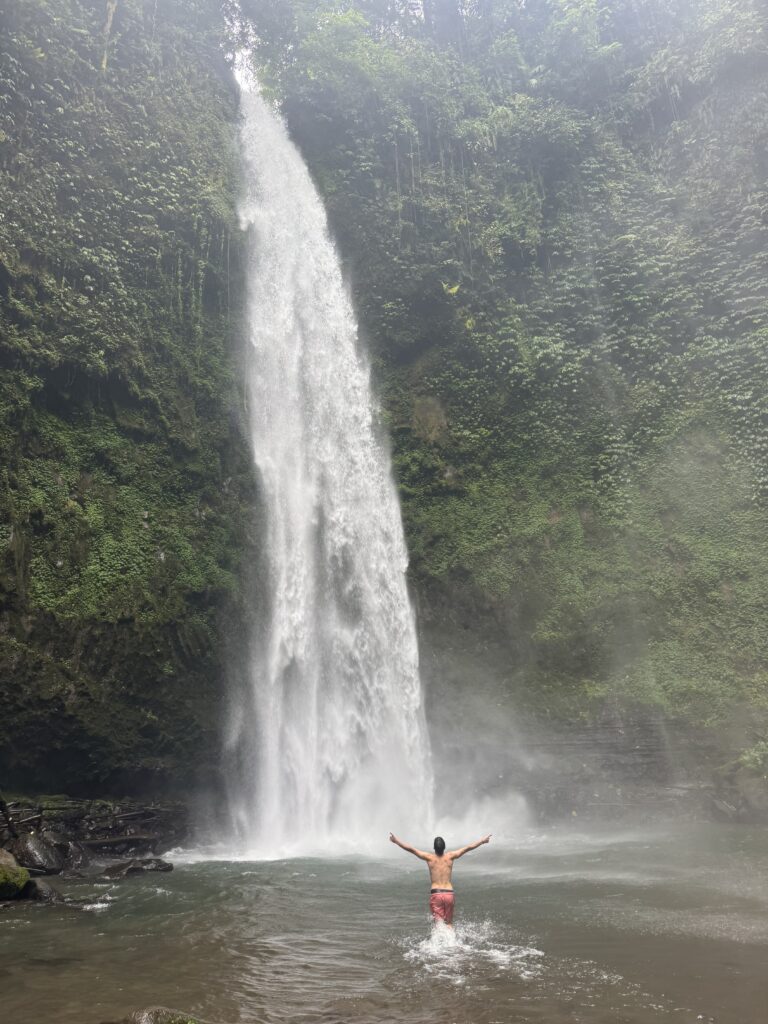
After thirty minutes on busy highways and country roads, we reach the waterfall parking lot. The driver tells me to meet him again at 4 p.m. I have less than forty minutes to rush down, take a swim, and climb back up the trail. I reach the pool drenched in sweat; when I dive into the icy water, my heart starts pounding in my chest. Seeing the waterfall from below fills me with excitement. It’s even taller than I expected.
I try to get closer to the cascade, but the current is too strong. No matter how much I paddle and kick, I can’t move forward a single meter. I experience it as something mystical, a kind of contact with the divine that refuses to be grasped. I step out of the water exhilarated. I don’t know it yet, but that would be my last swim for two years.
I get back on the bike with a sense of fullness that’s hard to describe. The driver goes even faster than on the way there, but this time I don’t ask him to slow down. I try to relax my muscles and enjoy the ride. At every turn or overtake, I move my body with the bike. It feels like gliding over the asphalt. I start thinking of the motorbike as a metaphor for a destiny I can’t change. The sooner I accept it, the better I’ll live it, I tell myself.
I can’t stop thinking about an almost absurd experience I had a few days earlier on the island of Java.
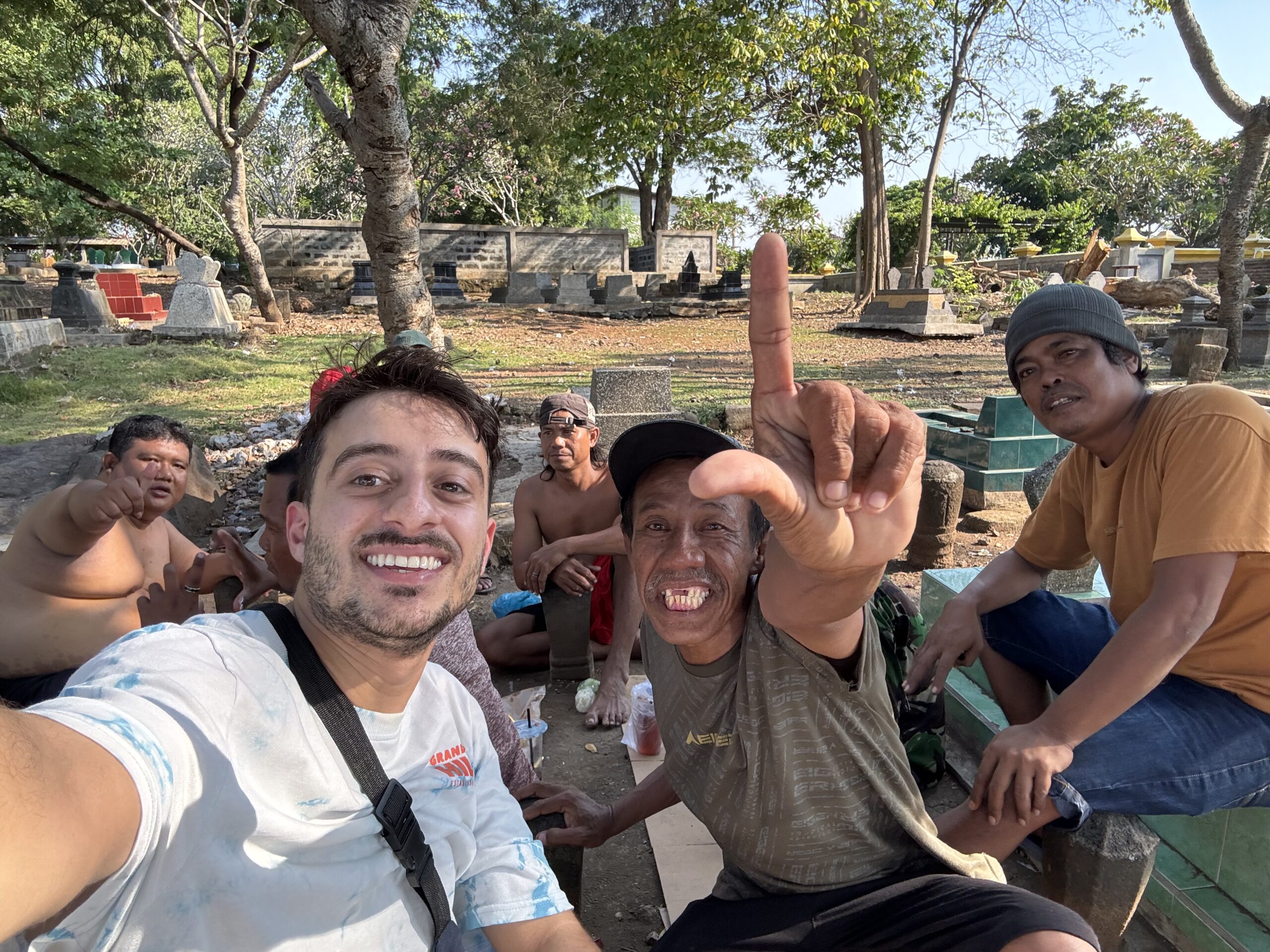
I was at the Rainbow Village in Semarang, near a cemetery. Hearing music and laughter coming from inside, I decided to take a look. Seven men were eating and drinking, sitting in a circle around a gravestone. When they saw me, they invited me to join their picnic.
They told me it’s completely normal there — a way to keep their loved ones company, even after death. That perspective on grief, so different from the Western world, fascinated me. Now I can’t shake the thought that death is just one of the many possible forms life can take.
At 4:15 p.m., I take out my phone to record this Instagram story. I can’t post it because there’s no signal, so I save it to my camera roll.
“Love and death are just two sides of the same coin, but how beautiful it is to be alive, today, in Bali.”
At 4:22 p.m., when the motorbike overtakes and we crash into the truck, my first reaction is neither shock nor surprise. Exactly forty-eight hours have passed since the omen at the temple. For two days I’ve felt death breathing down my neck. “There it is. So it was all true”, I think.
It takes me a good ten seconds to turn that strange resignation into fear and adrenaline.
I stare for a long time at my torn-open leg. I realize I’m not ready to die.
Not there. On that country road, in Indonesia. Far from everyone.
Maybe it’s my destiny, but I refuse to accept it.
I start screaming and waving my arms with all the strength I have.